
Isaiah Evans Scouting Report
Long wing, reliable shooter and top-level prospect on the road to the 2026 Draft

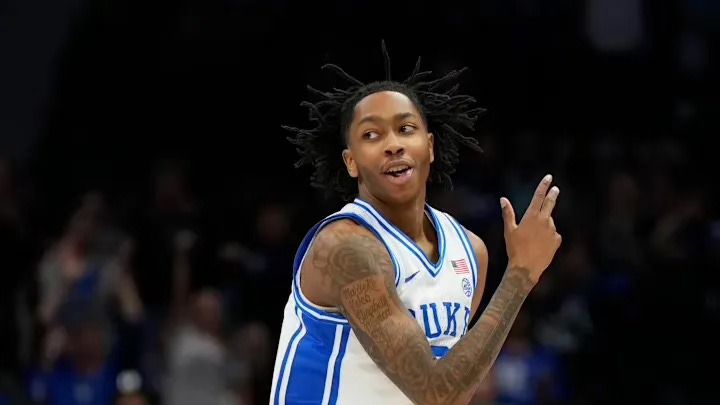
With the NCAA about to raise the curtain, the machinery that drives college basketball inevitably begins as well: the campaign for the 2026 NBA Draft. Although more than a year remains before the event at the Barclays Center, the spotlight is already turning toward the young talents who, between November and March, will be defining their credentials to make the leap into the professional ranks.
In this context, one of the names generating the most buzz is Isaiah Evans (born 2005, 1.98 m, small forward), player for the Duke Blue Devils. A five-star prospect from the class of 2024, Evans arrived at Durham as one of the top promises of his generation: a long wing with natural scoring instincts and a modern physical profile. In his freshman season, he already showed he has all the tools to become a high-level professional.
His first year was a learning experience: he took part in 36 games, initially in a rotation role, but eventually displayed flashes of great quality. He finished the season averaging 6.8 points, 1.1 rebounds and 0.5 assists in 13.7 minutes per game, standing out thanks to his shooting accuracy — 41.6% from three-point range, making 62 of 149 attempts.
Now, in his second year, Evans faces a greater challenge: not only to cement himself as a starter, but to become one of the team’s leaders, a key piece in Duke’s bid for the ACC title and March Madness success.
Physical and Athletic Profile
Isaiah Evans has the kind of body made for modern basketball. Standing at 1.98 metres tall with a wingspan close to 2.08, he moves with the agility of a guard and the length of a forward. His frame still has room to fill out, but even as a freshman he showed he could absorb contact on drives and defend multiple positions.
He is an athlete with an explosive first step that allows him to punish defenders in one on one situations, and his leaping ability makes him highly effective in transition and as a cutter to the rim. His style resembles that of modern NBA wings: long, mobile, able to run the floor and thrive in switch-heavy defenses. He still needs to add muscle to handle more physical opponents, but his athletic base is that of a high-upside prospect.
Offense
Ball Handling
For a player of his size, Evans’s handle is one of the most intriguing aspects of his game. He isn’t a primary creator, but he has a smooth and functional dribble. With space, he can create his own shot from the perimeter, something he already demonstrated in his freshman season, hitting step-back threes with ease. His handle is focused toward isolation play: an explosive first step, change of pace and controlled dribbles to set up his pull-up jumper.
What stands out most is Evans’s composure: he plays with the calm of a natural scorer. He doesn’t need flashy moves to generate space, a couple of dribbles and a step-back are often enough to open a shooting window. That efficient, economical style is part of what makes his offensive game projectable to the professional level.
Playmaking
In his first year at Duke, Evans was not a primary playmaker, as his 0.5 assists per game show. However, judging him solely by this number would be unfair: when he had the ball, he showed glimpses of solid vision, especially on drives. By attracting help defenders, he could find the open man in the corner or feed cutting bigs.
His size allows him to see over defenders and execute passes from tough angles. Still, his decision-making needs refinement: he sometimes forced drives when the better option was to move the ball a second earlier. In the compact defences of college basketball, that fraction of a second can make the difference between an assist and a turnover.
Heading into his second year, with more possessions and a larger offensive role, he will have the chance to show whether he can evolve into a true secondary playmaker, a highly valued role in modern basketball.
Scoring
Scoring is Evans’s defining trait and the main reason his name is already linked to the 2026 Draft. His freshman season confirmed him as an elite shooter, 41.6% from three on high volume, an impressive figure for a first year player. He wasn’t just a spot-up shooter; he scored in multiple contexts: catch-and-shoot, movement threes, step-backs, and even mid-range pull-ups.
His shooting mechanics are quick, and his confidence radiates through the screen. What impressed most was his consistency: even in games where he played only 12 or 15 minutes, he could still hit three or four triples and completely change Duke’s offensive rhythm. A perfect example was his first-half explosion against Illinois, when he hit six threes.
But Evans is more than just a shooter. His ability to attack the rim is a growing weapon. He has an explosive first step and long strides that allow him to cover ground in just two dribbles. When attacking off the bounce, he can finish with extended layups, floaters or dunks when given space. During his freshman season, he struggled against stronger interior defenders, but with added strength, he could become a more reliable finisher through contact.
His mid-range game is already a serious threat. He enjoys using pull-up jumpers and step-backs, which make him difficult to guard one-on-one, particularly against slower opponents. The key will be shot selection: at times, he bets too much on himself, taking forced shots when more efficient options exist. If he maintains his three-point volume and improves his decision-making from mid-range, he could quickly develop into a 15–17 points-per-game scorer in the NCAA this season.
A crucial detail is that Evans does not shy away from big moments. Even as a freshman in a secondary role, he took important shots in decisive situations, a sign of his competitive mentality.
Defense
Defensively, Evans is a versatile project with a high ceiling. His combination of size, wingspan and lateral quickness makes him an attractive profile for the next level. During his first year, although not yet a defensive specialist, he showed clear signs that he can develop into an impactful defender.
In individual defense, Evans proved he can guard tall shooting guards and athletic wings. His length allows him to contain drives even if he loses half a step, he extends his arms, cuts off angles and forces tough shots. Against smaller and quicker players, he still struggles somewhat, lacking lower-body strength and consistent lateral discipline, but his reach and recovery speed make him disruptive.
Off the ball, Evans is already valuable. His long arms make him a threat in passing lanes, and when focused, he can anticipate routes and force turnovers that fuel transition play. As a weak-side helper, his leaping and timing allow him to provide secondary rim protection, occasionally blocking shots.
His main issue is concentration and discipline. As a freshman, he often lost sight of his man, bit on fakes or arrived late on rotations. He also committed unnecessary fouls when gambling for steals. Still, these are common mistakes for a young player in limited minutes. With more playing time and responsibility, he is expected to become a more consistent perimeter defender.
In short, Evans has the tools to become a multi-positional defender capable of matching up with both guards and forwards. With physical development and tactical growth, he could evolve into a solid two-way player.
Rebounding
Evans’s rebounding numbers as a freshman, just 1.1 per game, do not truly reflect his potential in this area. His limited role and minutes at Duke restricted his opportunities, but his physical profile suggests rebounding should be part of his impact.
He has the mobility to box out guards and the length to secure contested boards. His main weakness lies in technique: he often relies on jumping rather than using his body to seal, which makes him inconsistent against stronger bigs or aggressive wings.
With more playing time, added strength and focus, Evans should become a more productive rebounder, not necessarily dominant, but a wing capable of holding his own defensively and contributing on the offensive glass, especially on long rebounds and fast-break opportunities.
Strengths and Weaknesses
Strengths
Elite outside shooting
Isaiah Evans has established himself as one of the best young shooters in college basketball. His mechanics are clean, quick and compact, allowing him to shoot even under pressure. He can score in various situations: spot-ups, movement threes, or step-backs, and his confidence remains steady even after misses, demonstrating mental toughness and competitive personality. His ability to stretch the floor and create space for teammates makes him a highly valuable offensive piece in modern basketball.
Offensive versatility and multi-level scoring
Beyond his perimeter shooting, Evans possesses a diverse offensive repertoire that allows him to adapt to different game contexts. He can score in transition, attack off the dribble or move off the ball to exploit defensive gaps. His explosive first step and control of pace help him beat slower defenders, while his length and touch enable him to finish efficiently near the rim. In the mid-range, he uses floaters and pull-ups effectively, expanding his scoring range. He plays with composure and understanding, rarely rushing his actions, traits that mark him as a three-level scorer capable of carrying an offence.
Ideal physical and athletic profile
Standing 1.98 metres tall with a wingspan close to 2.08 and notable lateral agility, Evans fits perfectly into the archetype of the modern NBA wing. He’s an athlete with excellent coordination, long strides and a strong first step that make him a constant threat in transition. His physique allows him to defend multiple positions, from tall guards to power wings, and to thrive in switching defensive systems. Offensively, his length and verticality make him dangerous cutting to the basket. While his body is still developing, his structure is sound and points to future physical growth that will enhance his two-way impact.
Weaknesses
Lack of physical strength and development
Despite his athletic frame, Evans still needs to add muscle mass to withstand consistent contact at both ends of the court. At times, he struggles to finish through physical defenders or hold position when rebounding. He also faces challenges protecting the ball on drives and defending in the post. These issues are typical of young players still growing into their bodies. To compete at the highest level, he must strengthen his upper body and core without compromising agility, a key step in realising his full potential.
Defensive inconsistency and lapses in focus
Evans has all the tools to be an elite defender, but his performance is still uneven. He tends to lose concentration off the ball, misjudge assignments or arrive late on rotations. In one-on-one situations, he sometimes relies too much on his wingspan and neglects proper footwork, leaving him vulnerable to quicker opponents. He also commits avoidable fouls when gambling for steals. His defensive progress will depend on his ability to maintain focus and tactical discipline throughout possessions. If he achieves that, he can go from a promising defender to a genuine perimeter stopper.
Decision-making and game management
One area Evans must refine is his ball management and reading of the game. As a freshman, he committed avoidable turnovers, often when forcing drives or attempting difficult passes on the move. Although he has shown flashes of good vision when drawing defenders and finding open teammates, his decision-making remains inconsistent. He occasionally settles for low-quality or forced shots, a common habit among young scorers. The key in his second season will be balancing his offensive aggression with smarter shot selection and better distribution. If he reduces errors without losing assertiveness, his offensive impact will grow significantly.
Projection
Isaiah Evans’s projection is directly linked to his development as a sophomore at Duke. As a freshman, he was essentially a spark plug off the bench — quick scoring bursts, perimeter shooting and energy in short stints. In 2025–26, he is expected to take the leap as one of the team’s leaders, establishing himself as a starter and offensive focal point.
His profile fits perfectly in the modern NBA: a long forward with range, self-creation ability and the defensive tools to guard multiple positions. Shooting above 40% from three on high volume as a freshman already makes him a proven threat from deep. If he maintains that efficiency with increased usage, a first-round selection looks highly probable.
What will define his ceiling is twofold. Defensively, he must evolve from an energetic but inconsistent player into a reliable, intelligent defender who can anticipate, switch and minimise mistakes. Offensively, he must grow from a streaky scorer into a consistent creator, improving his finishing through contact, refining shot selection and making quicker reads when finding teammates.
If he delivers in both areas, Evans has all the ingredients to become a first-round pick in the 2026 NBA Draft, with potential to climb even higher depending on his efficiency and leadership in his sophomore season. His ceiling resembles that of modern NBA wings who carve out long careers through versatility — players who shoot, defend and adapt across multiple roles.
Ultimately, Evans is not just a project but already a productive college player. The 2025–26 season will be his springboard: the moment to prove he can evolve from a “streak shooter” into a complete, high-level wing — ready to lead Duke and earn his place in the professional ranks.